

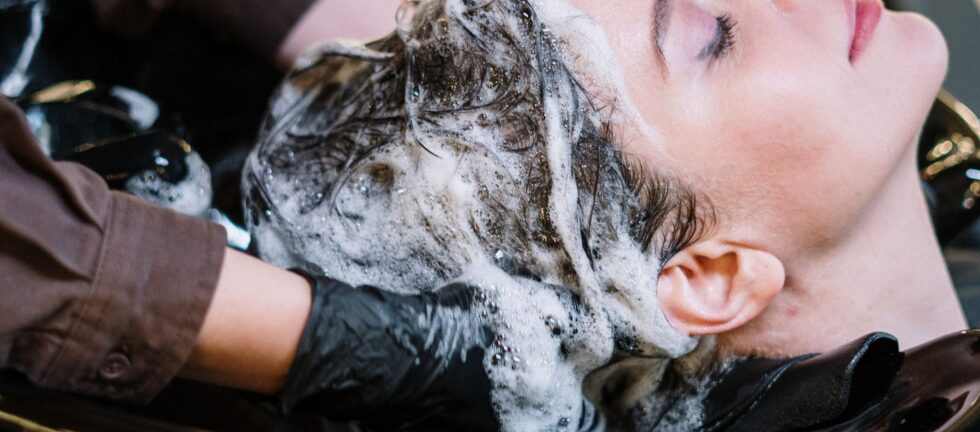
From the slip and shine of a dimethicone-based conditioner to the long-wearing hold of an acrylate
copolymer primer, these materials define sensory experience and performance. While their synthesis
is entirely petrochemical, the halal compliance auditor must examine not the silicone molecule itself —
which is inherently permissible — but the catalysts, processing aids, and crosslinking agents
used in its manufacture, as well as the final formulation matrix in which it resides.
1. Silicones in Cosmetics — Chemistry, Function, and the Halal Starting Point
Silicones are polymers based on alternating silicon-oxygen (Si-O) backbone chains, synthesized from silicon dioxide (quartz sand) through a multi-step industrial process involving chlorosilane intermediates. The major cosmetic silicone classes and their applications are:
| Silicone Type | INCI Examples | Primary Application | Baseline Halal Status |
|---|---|---|---|
| Dimethicone | Dimethicone, Dimethiconol | Conditioner slip, skin barrier repair | Permissible |
| Cyclomethicone (Cyclopentasiloxane) | Cyclopentasiloxane (D5) | Volatile carrier in serums, deodorants | Permissible |
| Aminosilicone | Amodimethicone, Trimethylsilylamodimethicone | Damaged hair cuticle repair, frizz control | Permissible* |
| Phenyl Silicone | Phenyl Trimethicone, Diphenyl Dimethicone | Shine enhancement, heat protection in hair oils | Permissible |
| Silicone Elastomer | Dimethicone Crosspolymer, Vinyl Dimethicone Crosspolymer | Soft-focus effect, pore minimizing | Conditional* |
| Silicone Wax | Stearyl Dimethicone, Behenoxy Dimethicone | Lip balm texture, hair wax hold | Conditional* |
*Conditional entries require supply chain documentation as described below.
2. The Three Hidden Halal Risk Vectors in Silicone Production
2.1 Platinum Catalyst Carrier Oils
The hydrosilylation reaction — which creates the Si-C bonds in aminosilicones and silicone elastomers — is catalyzed by Karstedt’s catalyst (a platinum-divinyltetramethyldisiloxane complex). This platinum catalyst is typically delivered to the reactor as a solution in a carrier oil. If that carrier oil is animal-fat-derived mineral oil or tallow-based solvent, the finished silicone polymer may contain trace animal lipid contamination.
Silicone elastomers produced via platinum-catalyzed hydrosilylation account for the majority of Conditional halal classifications. The Circle H audit protocol requires suppliers to confirm: (a) the chemical identity of the platinum catalyst carrier; (b) that the carrier is petroleum- or vegetable-origin, not animal-derived; and (c) that catalyst residue levels in the finished polymer are below 2 ppm Pt (per ISO 10082).
2.2 Fatty Acid Functionalization in Silicone Waxes
Silicone waxes such as Stearyl Dimethicone and Behenoxy Dimethicone are produced by grafting long-chain fatty acids (C18 stearic acid, C22 behenic acid) onto a polydimethylsiloxane backbone. The source of these fatty acids is the core halal question. Stearic acid can be sourced from:
- Palm oil / palm stearin (Halal Safe) — available from certified halal suppliers
- Beef tallow (Critical Risk) — common in cost-optimized industrial stearic acid
- Mixed animal-vegetable blend (High Risk) — undisclosed blending at the oleochemical refinery
The lipid carbon signature of the final silicone wax must be traced to its fatty acid precursor via Gas Chromatography-Mass Spectrometry (GC-MS) fatty acid profile analysis.
2.3 Crosslinker and Chain Extender Origin
Silicone elastomers use crosslinking agents — frequently methylhydrosiloxane copolymers with hydrogen-silane groups — to create the gel-like three-dimensional network. While the crosslinker itself is fully synthetic, some formulators dissolve elastomer pre-blends in cyclomethicone or isododecane carriers that are blended with animal-derived squalene (shark liver) rather than plant-derived squalane (olive or sugarcane). Always specify vegetable-origin squalane in carrier specifications.
3. Acrylate Copolymers and Film-Forming Polymers
Acrylate polymers (Acrylates Copolymer, Acrylates/C10-30 Alkyl Acrylate Crosspolymer, Carbomer) are petroleum-derived polyacrylic acid derivatives widely used as thickeners, film-formers, and suspension agents. Their synthesis is entirely synthetic with no biological raw material input.
Carbomers, Carbopol resins, and standard acrylate crosspolymers carry no inherent halal risk from their synthesis chemistry. However, the neutralizing agent used to activate the carbomer (typically Triethanolamine — TEA) requires a halal origin check if it is amino-acid-derived rather than fully synthetic.
3.1 Keratin and Protein-Based Film-Formers
Hydrolyzed protein ingredients — Hydrolyzed Keratin, Hydrolyzed Collagen, Hydrolyzed Wheat Protein — are commonly used as film-forming agents and conditioning actives in hair care and skin serums. These are the most significant biological origin risk in the polymer category:
| Protein Ingredient | Typical Source | Halal Risk | Detection Method | Halal Alternative |
|---|---|---|---|---|
| Hydrolyzed Keratin | Wool (sheep), feathers, nails, hair | High Risk | DNA-PCR species ID | Hydrolyzed Wheat Protein |
| Hydrolyzed Collagen | Bovine hide, porcine skin, marine fish | Critical Risk | LC-MS/MS peptide biomarker | Marine (fish) or plant collagen boosters |
| Hydrolyzed Elastin | Bovine aorta / ligament | Critical Risk | ELISA + LC-MS | Oat beta-glucan (film-forming) |
| Hydrolyzed Wheat Protein | Wheat gluten (plant) | Permissible | Allergen declaration only | Native ingredient |
| Hydrolyzed Soy Protein | Soy isolate (plant) | Permissible | Standard CoA | Native ingredient |
| Marine Collagen | Fish scales/skin | Conditional | Species ID PCR | Use certified halal fish source |
4. Hair Styling Polymers — Polyquaterniums and Hold Resins
Hair styling products rely on cationic polymers (Polyquaternium series) for conditioning, anti-static, and hold performance. The Polyquaternium family (PQ-7, PQ-10, PQ-11, PQ-44, PQ-67) are synthesized from petrochemical and vegetable-derived quaternary ammonium monomers. Their halal compliance assessment:
PQ-7, PQ-10, PQ-44 (Fully Synthetic)
Produced from acrylamide, DADMAC, or DMAEM monomers — all petrochemical. No biological origin. Permissible
PQ-6 (Silicone Quaternary)
Silicone backbone quaternized with amino groups. Apply platinum catalyst carrier audit as per silicone elastomers. Conditional
Guar Hydroxypropyltrimonium Chloride
Naturally derived from guar bean endosperm, quaternized with synthetic reagent. 100% plant origin. Permissible
Chitosan / Chitosonium
Deacetylated chitin from crustacean shells (shrimp, crab). Sea creatures; fish-class ruling applies. Origin audit and species declaration required. Conditional
5. Circle H International Silicone & Polymer Audit Framework
Full Formula INCI Classification
All polymers, silicones, and film-formers are classified into four tiers: Pure Synthetic (safe), Synthetic with Catalyst Risk, Protein-Based (biological), and Plant-Derived (safe). Each tier has a predefined documentation requirement.
Catalyst Carrier Audit (Silicone Elastomers)
Supplier provides technical specification sheet confirming petroleum- or vegetable-origin platinum catalyst carrier. GC headspace analysis confirms absence of animal lipid fingerprint.
Fatty Acid Chain GC-MS Profiling (Silicone Waxes)
GC-FID fatty acid carbon chain profiling determines whether grafted fatty acids derive from palm/soy (halal) or tallow/lard (non-halal) feedstocks.
Protein Species DNA-PCR (Hydrolyzed Proteins)
All hydrolyzed protein ingredients are tested via Real-Time PCR for porcine DNA (Sus scrofa) and bovine DNA (Bos taurus) if not from a declared plant origin.
ISO 22716 GMP Verification
Factory audit confirms dedicated manufacturing lines for halal-certified silicone lots and proper cleaning validation between non-halal and halal production runs.
Certificate Issuance & Traceability File
Circle H issues a product-specific halal certificate with full supplier traceability dossier, recognizing your product across 57 OIC member states.
Halal-Certify Your Hair Care and Skin Formulations Today
From dimethicone conditioners and silicone elastomer primers to hydrolyzed protein serums and polyquaternium styling gels — Circle H International’s polymer chemists deliver precise, globally recognized halal certification for your complete formulation portfolio.
