

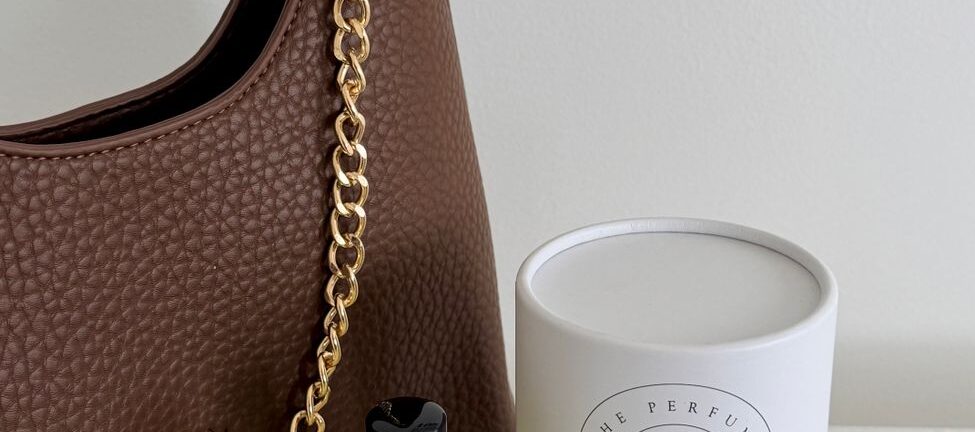
1. When Purity Becomes a Luxury Attribute
Luxury has always been a claim about materials. The handbag is priced by its hide, the cream by its actives, the fragrance by its fixatives. For a growing class of global consumers, that materials conversation now includes a certification question the industry once heard only in food: is the animal derived component in this product halal? The question reaches leather goods, premium skincare, fine fragrance, silk and wool processing, and even the adhesives inside a stitched sole, and it is being asked by some of the highest spending consumer segments in the world.
The demand side is documented. Muslim consumer spending on apparel and modest fashion alone is measured in the hundreds of billions of dollars annually in DinarStandard’s State of the Global Islamic Economy reporting, with cosmetics and personal care adding a comparably large category, and the Gulf states, Turkey, Malaysia, and Indonesia anchoring premium demand. Mainstream fashion coverage, from The Guardian to Al Jazeera’s fashion desk, has tracked modest fashion’s move from niche to mainstream runway. What has lagged is the supply side’s verification infrastructure: a luxury brand can tell a buyer exactly which tannery produced a hide, but rarely whether that hide’s journey, from slaughter basis to tanning chemistry to finishing fats, satisfies a halal standard.
This article examines what halal certification means when the product is not food: the material science of the audit, the categories where it matters most, and the commercial case for luxury houses treating verified purity as the next credential of craft.
2. The Material Science of Halal Luxury
Halal assessment in luxury goods is forensic materials work. Four input families dominate the findings.
2.1 Leather: Species, Slaughter Basis, and Tanning Chemistry
Leather is the archetypal halal question in fashion. The analysis has three layers. First, species and slaughter: bovine, ovine, and caprine hides are permissible in principle, but many scholars and standards require the animal to have been slaughtered per halal requirements for the hide to be used in articles of worship or bodily contact, and porcine leather, present in the global hide trade, is impermissible outright. Second, tanning chemistry: modern chrome tanning is largely mineral, but traditional and specialty processes use animal derived fats, oils, and enzymes in liming, bating, and fatliquoring, each carrying a provenance question. Third, finishing and assembly: waxes, polishes, thread lubricants, and adhesives can contain stearic acid and other animal derived components. A certified leather good therefore requires documentation from the hide supplier, the tannery, and the component suppliers, a chain the luxury sector is structurally well positioned to provide, given its existing traceability investments.
2.2 Fine Fragrance: Ethanol and Animal Fixatives
Alcohol in perfumery is the most visible halal question in luxury cosmetics. Standards and scholarly positions differ on synthetic versus fermented ethanol and on denatured alcohol in leave on products, but the commercial signal is unambiguous: alcohol free and halal certified fragrance lines are a fast growing premium segment across the Gulf and Southeast Asia, and several houses now launch them deliberately. Beyond ethanol, classic perfumery’s animal fixatives, civet, castoreum, and natural musk, are today mostly replaced by synthetics, which simplifies compliance, though natural oud and attar producers still document their carriers and maceration bases.
The formulation trend favors the compliant house. Modern perfumery’s palette is overwhelmingly synthetic aromatic, which means the technical cost of an alcohol free or fully documented fragrance line has never been lower. What remains scarce is not the chemistry but the verification: a certificate that lets a buyer in Dubai or Kuala Lumpur trust the claim without a private investigation of the formula.
2.3 Premium Skincare and Color Cosmetics
High end formulations concentrate the usual high risk actives at luxury prices: collagen and keratin in anti aging creams, carmine (E120) in prestige lipsticks, glycerin and stearic acid across emulsions, and lanolin in barrier products. Each requires origin documentation at the species level. The audit logic is identical to cosmetic certification generally; what differs in luxury is the number of SKUs, the small batch production model, and the brand risk attached to a provenance failure.
2.4 Textiles and Processing Aids
Fibers themselves, cotton, linen, silk, wool, cashmere, raise fewer questions than their processing. Silk’s permissibility for men’s garments is a jurisprudential discussion rather than a certification one, but textile processing aids are squarely in scope: sizing agents, softeners, and finishing treatments can be animal derived, and wool scouring agents and leather adjacent dyes occasionally are as well. For a vertically documented luxury supply chain, adding halal provenance to an existing fiber to finish dossier is incremental work, not a new discipline.
Jewelry and watches sit largely outside the certification conversation, with one instructive exception: leather straps and exotic skin components re enter scope, and maisons have learned that a client asking about a stingray or crocodile strap is often asking the halal question in another vocabulary.
3. What Certification Looks Like for a Luxury House
The certification architecture mirrors the food sector’s, adapted to materials. The engagement opens with a formulation and bill of materials review: every hide, active, solvent, wax, adhesive, and processing aid mapped to its origin and supplier documentation. Facility assessment follows, with attention to shared production: an atelier producing both certified and conventional leather goods must demonstrate segregation of hides, tools, and finishing materials, and validated cleaning where equipment is shared. The halal assurance system requirement scales to the house’s structure, typically a designated compliance owner within the supply chain or quality function, trained suppliers, and change control agreements so that a tannery’s process modification cannot silently invalidate a certified article.
Laboratory verification plays a supporting but growing role. Species identification by PCR can authenticate leather origin, and protein analysis methods can detect porcine derived components in fats and adhesives, giving the certificate an empirical layer beyond documentation. For a sector whose entire value proposition rests on authenticated origin, halal verification is best understood as one more assay in an existing culture of authentication.
4. Who Is Actually Asking
The halal luxury consumer is not a single profile, and brands that treat the segment as monolithic misread it. At the center is the Gulf premium buyer: high per capita spend, strong preference for recognized certification marks on anything that touches skin, and a well developed ability to distinguish genuine certification from marketing language. Around that center sit the Southeast Asian urban professional, for whom halal is a baseline expectation rather than a premium attribute, and the Western Muslim professional, who shops global luxury ecommerce and reads ingredient lists with the same fluency as a formulator. Beyond the observant core lies the halo audience: consumers of any background who read a halal mark as evidence of supply chain transparency, in the same way they read cruelty free or traceable origin credentials. The strategic implication is that halal certification in luxury functions on two levels at once: it is a compliance credential for the observant buyer and a transparency signal for everyone else.
Retail channels reflect this layering. Gulf department stores and pharmacy beauty chains increasingly ask imported cosmetics and fragrance brands for halal documentation during listing reviews. Modest fashion platforms and premium ecommerce marketplaces use certification as a merchandising filter. In Western markets the question arrives through the boutique rather than the regulator: a client asking whether a cream contains porcine derived collagen is a question the sales associate either answers with documentation or loses.
5. The Commercial Case
Three forces make certification strategically interesting for premium brands rather than merely accommodating. The first is purchasing power concentration: the Gulf luxury consumer is among the highest per capita spenders globally, and modest fashion’s mainstreaming has expanded the segment well beyond its original geography. The second is the trust transfer effect: a halal mark from a recognized body functions for these consumers the way an established maison’s hallmark functions for a collector, as pre verified assurance that removes diligence friction at the moment of purchase. The third is differentiation timing. Certification in luxury halal is early enough that first movers define the category’s reference points; the certified fragrance houses and the certified leather goods of this decade will hold the reference shelf positions in Gulf retail for the next one.
Export mechanics reinforce the case. Halal certification is a practical entry document for premium retail placement in Saudi Arabia, the UAE, Malaysia, and Indonesia, where mall operators, distributors, and ecommerce platforms increasingly treat it as a listing requirement for imported cosmetics and personal care, and as a powerful preference signal for leather goods and fragrance.
There is also a defensive dimension luxury executives recognize immediately: counterfeiting and gray market diversion thrive wherever authenticity is asserted but not verified. A certification regime that binds each product line to audited documentation and periodic reassessment adds one more layer of institutional authentication around the brand, complementary to serialization and provenance platforms already in use. The certificate is not an anti counterfeit technology, but the audited file behind it raises the cost of faking the brand’s compliance story, and gives the house a standing, third party record of what its genuine supply chain actually contains.
6. Where Halal Meets the Sustainability Agenda
Luxury’s other dominant credential conversation, sustainability and ESG, converges with halal certification more than either discourse usually admits. Both are provenance claims that depend on supply chain documentation; both fail in the same places (processing aids, subcontracted tiers, undisclosed reformulations); and both are increasingly verified rather than asserted. A house that has built traceability for deforestation free leather or responsible wool already holds most of the file a halal audit needs. The overlap runs the other way as well: halal standards’ insistence on humane slaughter, lawful sourcing, and honest labeling gives the certified article a defensible position in the ethical luxury conversation, one grounded in a codified standard rather than a marketing framework. For brand strategists, the practical consequence is that the two programs should share one documentation backbone rather than run as parallel compliance projects.
7. Failure Points for First Time Luxury Applicants
The recurring gaps are consistent. Undocumented processing aids, where the atelier knows its leathers but not its thread wax. Fragrance houses unable to state the origin of their ethanol. Carmine and collagen suppliers providing grade documentation but not species documentation. And change control, where a component supplier reformulates and the certificate’s assumptions quietly expire. None of these are expensive to correct; all of them are invisible until the audit asks.
8. A Practical Entry Sequence
For a house considering certification, the workable sequence is consistent across categories. Begin with a materials audit of a single hero product line rather than the full catalog: map every animal derived or ethanol adjacent component to species and origin, and identify which inputs already carry documentation and which need supplier engagement. Run that line through certification first, learn where the supply chain’s documentation culture is strong and where it is silent, and use the findings to phase the remaining catalog. Houses that attempt full catalog certification in one cycle typically discover that their component suppliers, not their own operations, set the pace. Houses that sequence by line convert the same work into a managed program with an early marketable win: the first certified collection, announced while competitors are still mapping their adhesives.
9. Conclusion: Craft’s Next Credential
Luxury’s authority has always rested on proof: of origin, of hand, of material. Halal certification extends that proof to a dimension the industry’s best documented supply chains are unusually ready to provide. The material science is established, the verification methods exist, and the consumer demand is measured in the hundreds of billions across fashion and beauty. For the houses that move first, certified purity is not a concession to a niche. It is the next credential of craft, issued in a language hundreds of millions of the world’s most valuable luxury consumers already speak.
Sources and Further Reading
- DinarStandard, State of the Global Islamic Economy Report 2024/25
- Salaam Gateway, SGIE Report 2024/25: Innovation, Sustainability Injects Impetus in Modest Fashion
- Al Jazeera, Modest Fashion’s Global Turn
- The Guardian, Modest Fashion Headed for Mainstream Despite Political Hostility, Say Experts
Circle H International
Get Your Luxury Line Halal Certified
Circle H International certifies leather goods, fragrance, and premium personal care formulations against international halal material standards, giving luxury houses a credible halal mark.
