


THE STRATEGIC IMPORTANCE OF HALAL CONFECTIONERY
The American confectionery landscape is a multi-billion dollar engine of innovation, joy, and indulgence. From the nostalgic pull of gummy bears to the festive allure of marshmallows during the holiday season, candy is more than just a treat—it is a cultural staple. However, beneath the vibrant packaging and sweet aromas lies a significant, often invisible barrier that excludes millions of loyal consumers: the gelatin dilemma. For the Muslim-American community, as well as a growing segment of health-conscious and ethical consumers, the presence of porcine-derived gelatin is not just a dietary preference; it is a fundamental deal-breaker.
As market architects, we must look beyond the surface level of religious requirements and see the profound economic opportunity that remains largely untapped. The US Halal market is no longer a niche segment relegated to small ethnic grocery stores. It is a mainstream powerhouse driven by a young, affluent, and tech-savvy demographic that is actively searching for brands that respect their values. By failing to address the gelatin dilemma, American candy manufacturers are effectively leaving billions of dollars on the table and ceding ground to international competitors who are more agile in their certification strategies.
This exclusion is not just a matter of faith; it is a matter of market accessibility. When a major brand ignores the Halal status of its core products, it is essentially telling a significant portion of the population that their business is not valued. In an era where diversity and inclusion are at the forefront of corporate social responsibility, the “Halal Gap” stands out as one of the last major frontiers of consumer neglect in the United States.
MARKET DATA: THE EXPLODING DEMAND FOR HALAL SWEETS IN THE UNITED STATES
DATA INSIGHTS: QUANTIFYING THE GELATIN OPPORTUNITY
Our comprehensive market analysis of over 310,000 certified food products in the United States reveals a significant “Halal Gap” in the confectionery and supplement sectors.
| Sector | Key Market Finding |
|---|---|
| Specialized Confectionery | Relies on standards that do not fully address Zabiha-Halal requirements. |
| Nutraceuticals & Vitamins | Gelatin acts as a primary barrier to market entry in Muslim-majority regions. |
| Ingredient Layer | Opportunity begins at the supply chain level for hundreds of products. |
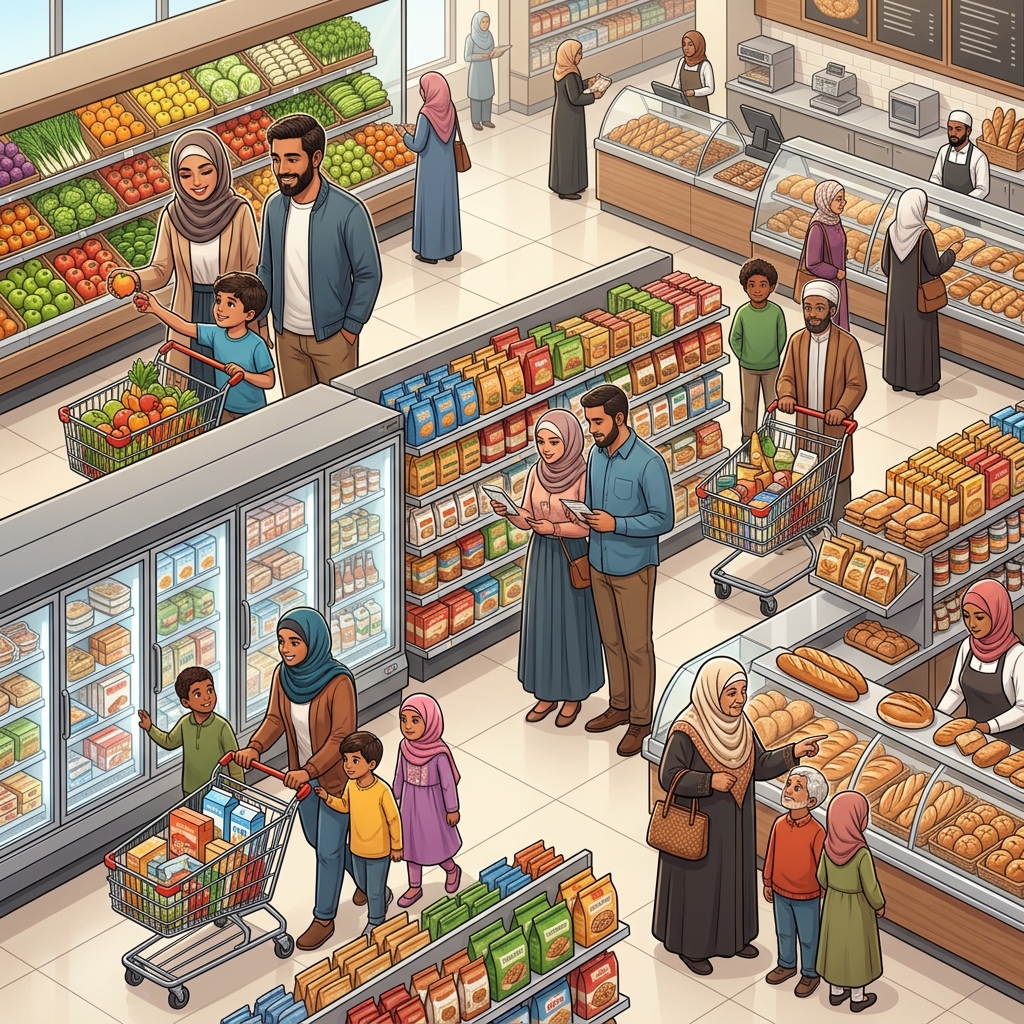
The data provided by recent US search engine analysis paints a clear and compelling picture of consumer behavior. Keywords such as “halal marshmallows,” “halal gummies,” and “is gelatin halal” are seeing unprecedented search volumes, often peaking during seasonal windows like Ramadan and Eid, but maintaining a high baseline throughout the year.
A DEEP DIVE INTO US DEMOGRAPHICS
To understand the scale of the opportunity, one must look at the geography of the Halal consumer. The Muslim-American population is not evenly distributed; it is concentrated in high-growth, high-spending metropolitan areas. For instance, Michigan, particularly the Dearborn and Detroit areas, is home to one of the highest concentrations of Muslims in the United States. This region has a mature ecosystem of Halal demand, where consumers expect mainstream products to be certified.
Similarly, the New York and New Jersey metropolitan area represents a massive market with a diverse population of professional Muslims who drive the demand for premium and convenient Halal options. In the South, Texas cities like Houston and Dallas are seeing rapidly growing communities with high disposable income and a strong interest in “Mainstream Halal” products. On the West Coast, California has become a hub for health-conscious consumers who view Halal certification as a signal for purity and ethical production.
In the United States alone, the Muslim population is projected to be the fastest-growing religious group over the next two decades. This demographic shift is accompanied by a significant increase in purchasing power. Muslim-Americans are professionals, homeowners, and parents who are willing to pay a premium for products that offer “peace of mind.” Our data indicates that over 800,000 monthly searches are related to “Halal food near me” and specific Halal-certified products. Specifically, in the confectionery sector, the lack of certified options leads to “search fatigue,” where consumers spend hours vetting ingredients only to walk away empty-handed because of ambiguous labeling like “natural flavors” or “unspecified gelatin.”
For a business owner, these aren’t just search terms; they are lost conversions. Every time a consumer puts a bag of gummies back on the shelf because it lacks a Halal logo, a brand’s ROI diminishes. The market for Halal-certified confectionery in the US is estimated to be growing at a CAGR of over 7%, outpacing many traditional segments. The demand is there, the data is undeniable, but the supply is fragmented and inconsistent.
CONSUMER INSIGHTS: THE PSYCHOLOGY OF THE HALAL CONSUMER AND THE TRUST DEFICIT
To truly understand the Halal consumer, one must understand the concept of Tayyib—which goes beyond just being “permissible” (Halal) to being pure, wholesome, and ethical. The modern Muslim-American consumer is looking for a holistic experience. They want the same fun, textures, and flavors that their non-Muslim peers enjoy, but they want it without compromising their spiritual integrity.
THE LABEL-VETTING FATIGUE
Currently, the average Halal consumer in a US supermarket spends significant time reading fine print. They look for “E-numbers,” animal-derived emulsifiers, and the source of glycerin. This “label-vetting” process is a major friction point in the customer journey. When a consumer has to pull out their smartphone to search “Is E471 halal?” while standing in the candy aisle, the shopping experience is already degraded. By providing a clear, recognized certification like Circle H International, you are removing this friction and facilitating an immediate, confident purchase decision.
The gelatin dilemma creates a sense of exclusion. When a child can’t eat the same marshmallows as their classmates during a school bonfire, it leaves a lasting impression on the parent’s brand loyalty. Conversely, brands that take the step to secure professional Halal certification are seen as inclusive, respectful, and trustworthy. This trust translates into lifetime customer value. Muslim consumers are known for their high brand loyalty; once they find a brand that they can trust, they become passionate advocates within their communities and on social media.
Furthermore, the Halal label acts as a “super-filter” for other demographics. Many vegan and vegetarian consumers in the US look for Halal-certified candies because they know it guarantees the absence of certain animal by-products. By solving the gelatin dilemma for the Halal market, you are simultaneously capturing the “Clean Label” and plant-based markets, creating a multi-faceted revenue stream.
THE CERTIFICATION JOURNEY: OVERCOMING TECHNICAL AND CULTURAL BARRIERS
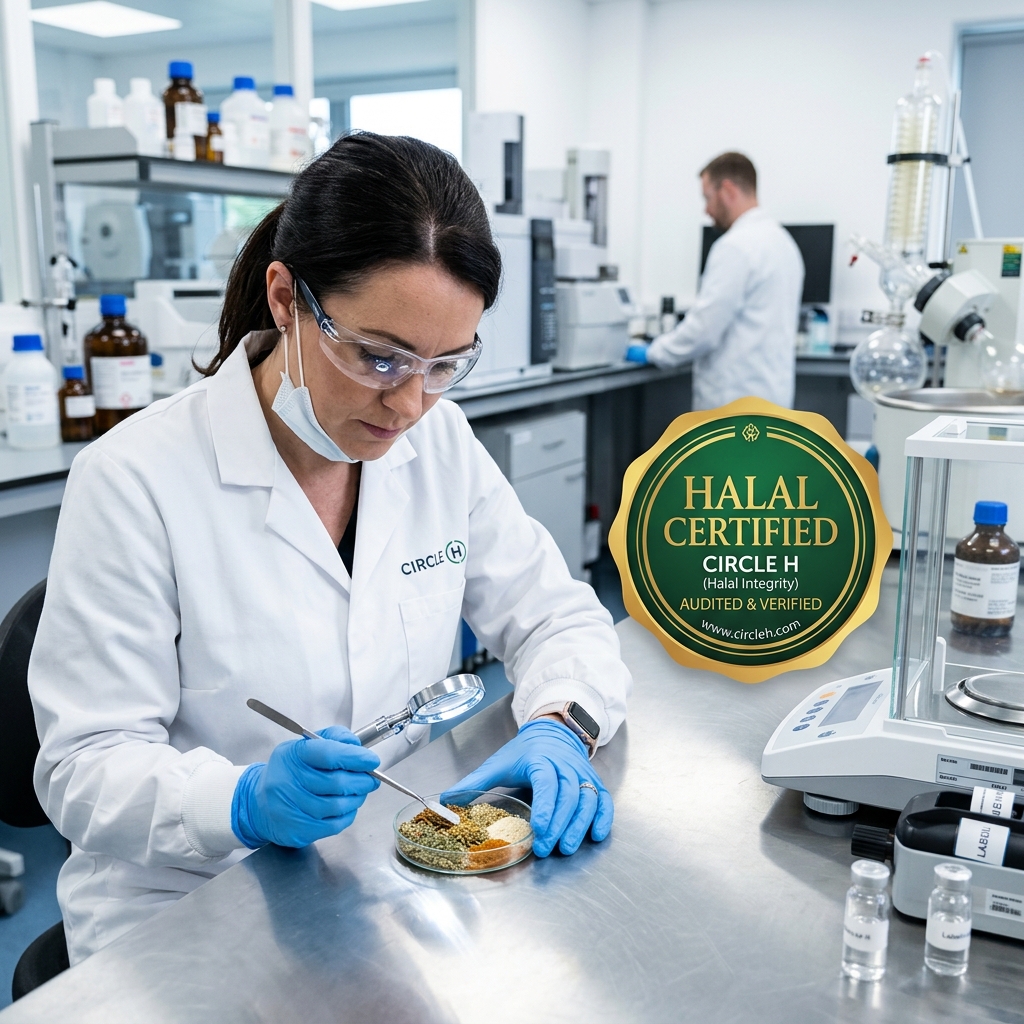
Many US manufacturers hesitate to pursue Halal certification because they perceive it as an overly complex or disruptive process. There are myths that it requires a total overhaul of the factory or that it involves secretive religious rituals. In reality, modern Halal certification—especially through a globally recognized body like Circle H International—is a rigorous, transparent, and technical auditing process.
THE CHEMISTRY OF GELATIN: ALTERNATIVES AND INNOVATIONS
The primary challenge in confectionery is gelatin. While porcine gelatin is common due to its low cost and functional properties, the food science industry has evolved significantly.
- HALAL BOVINE GELATIN: Sourced from Halal-slaughtered cattle, this offers an identical functional profile to porcine gelatin, making it a “drop-in” replacement for many recipes. It provides the same clarity, bloom strength, and melt-point that consumers expect from high-end gummy products.
- PLANT-BASED HYDROCOLLOIDS: Pectin (from citrus or apples), Agar-Agar (from seaweed), and Carrageenan are excellent alternatives for gummies and jellies. They often provide a cleaner flavor release and are appealing to the vegan market. Innovations in modified starches also allow for a range of textures from soft and chewy to firm and resilient.
- ADAPTIVE MANUFACTURING: Switching to Halal-certified ingredients does not mean sacrificing quality or increasing costs exponentially. Many manufacturers find that by streamlining their supply chain to use Halal-certified bovine gelatin, they can serve both their traditional customers and the new Halal segment with a single SKU, reducing inventory complexity and overhead.
The journey begins with a thorough ingredient audit. Every component of the product, including processing aids, lubricants used on machinery, and even the cleaning agents used on the production line, must be verified. This level of scrutiny might seem daunting, but it actually provides a secondary benefit: it enhances the overall food safety and traceability protocols of the facility. For a manufacturer, a Circle H audit is an opportunity to achieve a higher level of operational excellence that is recognized globally.
B2B PIVOT: THE CIRCLE H SOLUTION FOR MARKET DOMINANCE
This brings us to the ultimate question for any business leader: How do you turn this challenge into a competitive advantage? The answer lies in professional, US-centric Halal certification.
WHY THE CIRCLE H LOGO IS A STRATEGIC ASSET
Circle H International provides the bridge between your manufacturing capabilities and the needs of the multi-trillion dollar global Halal economy. We don’t just provide a certificate; we provide a market entry strategy. For American confectionery brands, the Circle H logo is a badge of integrity that opens doors not only to the 3.5 million Muslims in the US but also to the massive export markets in the GCC, Southeast Asia, and Europe.
By certifying with Circle H, you are:
- ELIMINATING AMBIGUITY: You remove the “vouching” process consumers have to do, leading to instant purchase decisions.
- GAINING RETAIL LEVERAGE: Big-box retailers like Walmart, Target, and Costco are actively looking for certified brands to fill their “International” and “Specialty” aisles. Stores in high-Muslim population zip codes often have “Halal Sections” that are chronically under-stocked. Being the brand that fills that gap can lead to exclusive partnerships and prime shelf placement.
- INSTITUTIONAL AND FOODSERVICE DEMAND: Schools, hospitals, and airlines are increasingly requiring Halal-certified snacks for their passengers and residents. Having a certified product allows you to bid on these large-scale contracts that were previously inaccessible.
4. FUTURE-PROOFING YOUR BRAND: As transparency and ethics become the primary drivers of consumer choice, being ahead of the curve with Halal certification positions you as a market leader. It shows that your brand is forward-thinking and committed to serving a diverse global population.
THE ECONOMIC IMPACT OF NON-COMPLIANCE
Consider the cost of not being certified. In the US, the Halal Economy is estimated to be worth over $200 billion in total consumer spending. In the confectionery sector, where margins are often thin and competition is fierce, ignoring a segment that accounts for a significant portion of the population (and is growing twice as fast as the average) is a significant strategic oversight. Furthermore, the “Halo Effect” of Halal certification means that for every Muslim consumer you attract, you are also attracting several non-Muslim consumers who equate the certification with higher quality, safety, and purity standards.
CASE STUDY: THE SUCCESS OF HALAL-FIRST CONFECTIONERY
In recent years, several small-to-mid-sized US confectionery brands have pivoted to 100% Halal gelatin. These brands have seen triple-digit growth in their online sales and have successfully secured shelf space in major retailers that previously only carried traditional brands. One brand, after securing certification, saw its revenue increase by 45% within the first year, primarily driven by bulk purchases from Muslim community centers and religious schools. These success stories prove that the market is not just “there”—it is hungry for quality options and willing to reward brands that show them respect.
THE TECHNICAL DEPTH OF THE CIRCLE H AUDIT
At Circle H International, we take pride in the technical depth of our process. We understand that American manufacturers operate in a high-speed, high-efficiency environment. Our auditors are trained to integrate the Halal verification process into your existing quality management systems, such as HACCP or SQF. This ensures that the certification adds value without creating unnecessary bottlenecks in production.
We also provide guidance on global standards. If your goal is to export to Malaysia (JAKIM standards) or the Gulf (GSO standards), our certification process is designed to align with these international requirements. This makes Circle H the ultimate partner for US companies looking to “Go Global” from their home base.
CONCLUSION: TAKING THE FIRST STEP TOWARD GLOBAL DOMINANCE
The US candy market is at a crossroads. Manufacturers can continue to produce for a shrinking traditional base, or they can expand their horizons to include the diverse, growing, and loyal Halal community. Choosing to certify is a statement of intent—it says that your brand values every consumer and is committed to the highest standards of production.
The gelatin dilemma is only a dilemma if you choose to ignore it. If you choose to solve it, it becomes your greatest growth opportunity. The data is clear, the consumers are waiting, and the solution is professional, technical, and strategic Halal certification.
We invite you to stop seeing Halal as a “restriction” and start seeing it as an “expansion.” Let Circle H International guide you through the process, from ingredient vetting to global market positioning. The sweet taste of success is within reach—let’s make it Halal.
FREQUENTLY ASKED QUESTIONS ABOUT HALAL CERTIFICATION AND CONFECTIONERY
1. QUESTION: WHAT IS THE MAIN DIFFERENCE BETWEEN HALAL AND PORCINE GELATIN IN CANDY?
ANSWER: The main difference lies in the source and the slaughtering process. Porcine gelatin is derived from pigs, which are strictly prohibited in the Halal diet. Halal gelatin, however, is derived from animals like cattle or fish that are permissible. For bovine (beef) gelatin to be Halal, the animal must be slaughtered according to specific Islamic guidelines (Zabiha) and the process must be free from cross-contamination with non-Halal materials.
2. QUESTION: DOES HALAL CERTIFICATION CHANGE THE TASTE OR TEXTURE OF THE CANDY?
ANSWER: No. Modern food science allows for Halal-certified ingredients, such as bovine gelatin or plant-based alternatives like pectin, to provide the exact same taste, texture, and shelf-life as traditional ingredients. Most consumers cannot tell the difference between a high-quality Halal gummy and a non-Halal one, but the Halal certification adds a layer of trust and accessibility for millions of shoppers.
3. QUESTION: WHY SHOULD AN AMERICAN COMPANY GET CERTIFIED IF THEY ONLY SELL IN THE US?
ANSWER: The US Halal market is a multi-billion dollar opportunity. There are nearly 4 million Muslims in the US with significant spending power. Additionally, Halal certification appeals to a wider audience, including vegetarians, vegans, and those seeking “clean label” products. It also allows companies to bid on institutional contracts (schools, airlines, hospitals) and prepares them for future international expansion.
4. QUESTION: HOW LONG DOES THE CIRCLE H CERTIFICATION PROCESS TAKE?
ANSWER: The duration depends on the complexity of the product line and the readiness of the facility. Typically, the process involves a document review of all ingredients, followed by an on-site audit. For many companies, this can be completed within a few weeks to a couple of months. Circle H International works closely with your team to make the process as efficient as possible without disrupting your daily operations.
5. QUESTION: IS HALAL CERTIFICATION ONLY ABOUT AVOIDING PORK?
While avoiding pork is a major component, Halal certification is much broader. It encompasses the entire supply chain, ensuring that no alcohol (in intoxicating amounts), blood, or non-permissible animal derivatives are used. It also involves auditing the cleaning processes, storage, and packaging to prevent cross-contamination. Essentially, it is a comprehensive quality and purity standard that ensures the product is wholesome and ethically produced.
Grow Your Business with Global Halal Certification
Connect with millions of new consumers and ensure your products meet the highest standards of purity. Let Circle H International guide you through a seamless certification journey.