

Introduction: The Industrial Velocity of Modern Commercial Poultry
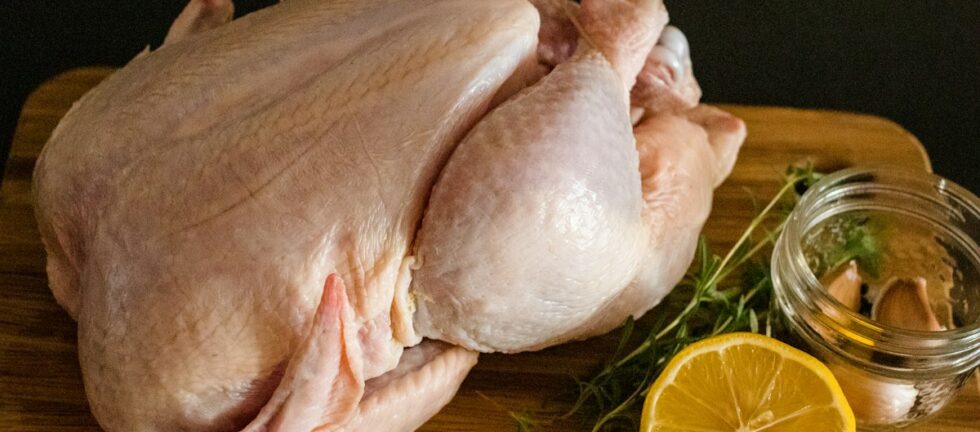
Poultry – primarily broilers, turkeys, and spent laying hens – constitutes the most widely consumed, versatile, and rapidly expanding animal protein source on earth. Valued in the hundreds of billions of dollars, the global poultry processing industry operates at breathtaking technological velocity. Modern broiler abattoirs routinely operate high-speed automated processing lines traveling at speeds between 9,000 and 15,000 birds per hour (150 to 250 birds per minute) across multi-line operations running continuous double shifts. From automated live-bird unloading modules and shackle conveyors to high-frequency electrical water baths, automated rotary neck-cutters, multi-stage scalding tanks, counter-rotating feather pickers, and automated evisceration carousels, modern poultry harvesting is an engineering triumph of mechanization.
يَسْأَلُونَكَ مَاذَا أُحِلَّ لَهُمْ ۖ قُلْ أُحِلَّ لَكُمُ الطَّيِّبَاتُ ۙ وَمَا عَلَّمْتُم مِّنَ الْجَوَارِحِ مُكَلِّبِينَ تُعَلِّمُونَهُنَّ مِمَّا عَلَّمَكُمُ اللَّهُ ۖ فَكُلُوا مِمَّا أَمْسَكْنَ عَلَيْكُمْ وَاذْكُرُوا اسْمَ اللَّهِ عَلَيْهِ ۖ وَاتَّقُوا اللَّهَ ۚ إِنَّ اللَّهَ سَرِيعُ الْحِسَابِ
Surah Al-Ma’idah (5:4)
However, within the global Halal meat and food safety ecosystem, high-speed poultry processing presents the single highest concentration of complex compliance controversies. When living birds travel past automated cutting blades at fractions of a second, the fundamental theological mandates of Islamic slaughter – individual religious intent, audible verbal invocation of the Tasmiyah, precise anatomical severance of neck vessels, and verifying that each bird was undeniably alive at the moment of slaughter – clash directly with raw industrial speed. For global poultry integrators seeking export accreditation into major consuming markets across the Middle East (Saudi Arabia, the UAE, Qatar, Kuwait) and Southeast Asia (Malaysia, Indonesia), compliance with standards such as GSO 2055-1, OIC/SMIIC 1, and MS 1500 is non-negotiable. This comprehensive technical guide analyzes the operational and theological control points in commercial poultry slaughter and details the rigorous certification framework enforced by Circle H International.
The Pre-Slaughter Stunning Debate in Poultry Processing
Under all internationally recognized Halal accreditation standards, pre-slaughter stunning of poultry is strictly circumscribed by one absolute theological mandate: Hayat Mustaqirrah (verifiable, stable life). The bird must be fully alive, possessing active cardiac rhythm and respiration, at the precise moment the slaughter incision is made. The stunning method must be strictly reversible and must never inflict death, skull fracture, or permanent cardiac arrest prior to bleeding. Any bird that dies as a consequence of stunning prior to the neck cut is legally classified as maytah (carrion), which is ritually impure and strictly forbidden for consumption.
Water-Bath Electrical Stunning (Low-Frequency vs. High-Frequency)
Water-bath electrical stunning is the most prevalent stunning technology utilized in commercial broiler slaughterhouses worldwide. In this system, live birds suspended upside-down by their legs in metal shackles travel along an overhead conveyor into an electrified shallow water bath. The bird’s head and neck are submerged in the water, completing an electrical circuit that passes from the water, through the head and body, to the grounded shackle line.
The primary compliance danger in electrical water baths is the risk of ventricular fibrillation (cardiac arrest). If the electrical current (amperage) or voltage is set too high, or if low electrical frequencies (50 or 60 Hz) are applied, a substantial percentage of birds suffer instantaneous heart failure in the bath, effectively drowning or dying from electrocution before reaching the slaughter station. To prevent pre-cut mortality, international Halal standards enforce precise electrical windows:
- High-Frequency Currents: Standards such as OIC/SMIIC 1 and GSO 2055-1 mandate the use of high-frequency electrical currents (typically 400 to 1,500 Hz or higher) rather than low-frequency mains electricity. High-frequency waveforms effectively disrupt cerebral electroencephalogram (EEG) activity, inducing instantaneous unconsciousness and pain insensibility without inducing cardiac ventricular fibrillation.
- Current Calibrations: The average current delivered per broiler chicken must be carefully controlled, generally calibrated between 45 and 100 milliamperes (mA) depending on bird weight and electrical frequency, with an immersion exposure duration between 4 and 7 seconds.
- Continuous Revival Verification: Abattoirs operating certified Halal lines must conduct routine, documented revival tests at the beginning of each production shift and whenever flock weight parameters change. An auditor or designated QA officer randomly removes birds immediately exiting the water-bath stunner and places them in a recovery enclosure; 100% of the sampled birds must show clear physiological recovery (eye reflexes, righting reflex, rhythmic breathing) within 60 to 90 seconds.
Controlled Atmosphere Stunning (CAS) / Gas Stunning
In Europe and North America, many high-capacity poultry integrators have transitioned from electrical water baths to Controlled Atmosphere Stunning (CAS) systems utilizing carbon dioxide (CO2), nitrogen, or argon gas mixtures. In CAS systems, live broilers remain in their transport crates and pass through multi-stage gas chambers where progressive hypercapnic hypoxia induces insensibility.
However, from the standpoint of global Halal export compliance, CAS systems are widely rejected or explicitly prohibited under major international Halal standards, including UAE.S/GSO 2055-1, Saudi Food and Drug Authority (SFDA) technical regulations, and OIC/SMIIC 1. In high-concentration CO2 systems, birds frequently suffer irreversible anoxia and succumb to respiratory or cardiac arrest inside the gas tunnel, emerging biologically dead before the slaughter cut can be administered. Consequently, poultry plants utilizing CAS systems are generally disqualified from receiving Halal certification for export to the GCC and other premier Halal destinations.
Manual Slaughter vs. Mechanical Rotary Blades: The Defining Operational Divide
The execution of the slaughter cut represents the most significant operational divergence between conventional automated poultry processing and certified Halal production.
The Mechanical Rotary Blade System
In standard commercial abattoirs, stunning is followed immediately by an automated mechanical killer consisting of spinning circular steel blades. As the shackle line conveys birds past the rotary blade, an adjustable guide bar positions the bird’s neck so the spinning blade slices across the throat. To adapt this setup for Halal production, some certification entities historically permitted a compromise: a Muslim slaughterman stood beside the mechanical cutter continuously reciting “Bismillahi Allahu Akbar”, or an audio recording was played while the automated blades operated.
Under contemporary international accreditation standards – including GSO 2055-1, OIC/SMIIC 1, SFDA directives, and Indonesian BPJPH regulations – **mechanical blade slaughter is strictly rejected**. Leading juristic academies and accreditation bodies have ruled that a single generalized blessing over a mechanical device cannot fulfill the divine commandment of individual intentional slaughter (al-qasd). Furthermore, mechanical blades routinely cause anatomical non-conformances: variations in bird flock size lead to misaligned cuts where the blade decapitates the bird entirely, severs only the trachea while missing the carotid arteries, or merely scratches the skin, allowing the bird to enter the scalding tank alive.
The Certified Solution: High-Speed Manual Slaughter Benches
To achieve uncompromising Halal certification and unrestricted global market access, poultry processing plants must implement **100% manual Halal slaughter**. In high-speed facilities processing 12,000 birds per hour, this requires a well-engineered manual slaughter station:
- Multi-Slaughterman Rotation Benches: The plant installs an ergonomic slaughter platform along the shackle line staffed by a team of certified Muslim slaughtermen working in coordinated rotation. For a line running 12,000 birds per hour, a bench of 4 to 6 slaughtermen is deployed, with each slaughterman rhythmically cutting every 4th or 6th bird, ensuring that each individual cut is executed deliberately and without physical fatigue.
- Continuous Audible Tasmiyah: Each slaughterman holds a razor-sharp, custom-ground knife and audibly pronounces the Tasmiyah (“Bismillahi Allahu Akbar”) over every single bird at the precise instant of making the incision.
- Full Anatomical Transection: The manual cut cleanly severs the trachea (halqum), esophagus (mari’), and both carotid arteries and jugular veins (wadajayn) in the ventral neck, while strictly avoiding severance of the spinal cord (nukha’) to maintain cardiac pumping and complete bleeding.
- Backup Slaughterman (The “Catcher”): An additional certified Muslim slaughterman is stationed immediately downstream from the primary slaughter bench to visually inspect every bird. Any bird that was inadvertently missed or partially cut by the primary team is immediately and cleanly slaughtered by hand before the shackle line enters the bleeding tunnel.
Bleeding Tunnels, Scalding Tanks, and Hot Water Risks
Once slaughtered, broilers enter an enclosed bleeding tunnel where gravity and residual cardiac contraction drive rapid exsanguination.
Bleeding Duration Standards
Adequate bleeding time is both a Sharia requirement and a core food safety parameter. International Halal standards specify a mandatory minimum bleeding time – typically between 90 and 120 seconds for broiler chickens (and up to 150 seconds for turkeys) – before the shackle line reaches the scalding tank. This duration ensures that cerebral circulation has ceased completely, brain death is irreversible, and the vast majority of circulating blood volume has evacuated the carcass. Premature entry into the scalder while blood is still circulating leads to engorged wing capillaries, unsightly skin discoloration, and severe microbial contamination.
Scalding Tank Temperatures and Inhalation Risks
The scalding tank is an insulated hot water bath designed to soften feather follicle proteins, facilitating mechanical feather plucking in downstream defeathering pickers. Scalding parameters typically operate under two thermal regimes: “soft scalding” (50°C to 53°C for 2.5 to 3.5 minutes, preserving the epidermal yellow skin) or “hard scalding” (58°C to 62°C for 1.5 to 2 minutes, removing the cuticle).
The critical Halal control point in scalding centers on the physiological state of the bird upon immersion. If a bird entered the scalder alive (due to a missed cut or an ineffective stun), it would gasp and inhale scalding, feces-contaminated water directly into its lungs and air sacs, and the intense heat would cook an un-slaughtered, un-bled bird. In Islamic jurisprudence, a bird that dies inside the scalder is munkhaniqah (an animal killed by suffocation or drowning), which is categorically haram. Circle H International technical auditors inspect bleeding tunnel lengths, line conveyor speeds, and post-slaughter monitoring protocols to guarantee zero live-bird entry into scalding tanks.
Evisceration, Inspection, and Chilling Dynamics
Following defeathering, carcasses proceed to the evisceration room, where automated vent-cutters, evisceration spoons, and veterinary inspection mirrors expose internal viscera for pathology assessment. In multi-species plants or facilities handling diverse product categories, preventing cross-contamination from pork derivatives or non-certified meat residues is vital.
Chilling Technology: Water Immersion vs. Air Chilling
Rapid chilling of dressed poultry carcasses down to 4°C or below within 4 hours of slaughter is required by food safety regulations (such as USDA, EU, and Codex Alimentarius) to inhibit pathogenic bacterial growth (notably Salmonella enterica and Campylobacter jejuni):
- Air Chilling: Carcasses travel along overhead chill lines through massive refrigerated rooms circulating humidified cold air. Air chilling results in superior skin crispness and zero extraneous water absorption, making it the preferred method for premium export-grade Halal poultry.
- Immersion Water Chilling (Screw / Counter-Current Chillers): Widely deployed in the Americas, carcasses are propelled through large communal water tanks containing chilled water and antimicrobial processing aids. While permissible under Halal standards, water chilling introduces regulatory scrutiny regarding moisture absorption limits (typically capped at 8% to 12% by international customs authorities) and requires certified food-grade, Halal-compliant antimicrobial wash aids (such as peracetic acid / PAA or acidified sodium chlorite).
The Circle H International Poultry Certification Protocol
Circle H International operates an internationally accredited certification framework for commercial poultry processors conforming to ISO/IEC 17065, GSO 2055-2, and SMIIC 2. Our poultry audit program includes:
- Line Velocity and Ergonomic Calibration: Our senior meat science auditors evaluate shackle line speeds, calculate required slaughterman team sizes, and verify that conveyor pacing provides sufficient time for flawless manual cutting and individual Tasmiyah.
- Electrical Stunning Calibration and Revival Validation: Continuous monitoring of high-frequency electrical parameters (voltage, amperage, frequency, and immersion time), backed by statistically robust post-stun revival testing.
- Slaughter Staff Credentialing and Supervision: Comprehensive verification of the religious credentials, practical training, and physical competency of all on-site Muslim slaughter personnel.
- Scalding and Bleeding Line Verification: Verification of minimum 90-to-120-second bleeding tunnel transit times and the implementation of automated optical or manual fail-safe systems preventing un-cut birds from reaching scalding water.
- Tamper-Proof Export Documentation: Issuance of authenticated, blockchain-verified Halal slaughter certificates and serialized container seals that facilitate frictionless clearance at customs inspection checkpoints across the GCC, Southeast Asia, and worldwide.
Conclusion: Operational Excellence and Global Poultry Leadership
The global demand for high-quality, certified Halal poultry is experiencing unprecedented growth. Commercial poultry enterprises that invest in professional manual slaughter benches, optimize high-frequency electrical stunning, enforce strict bleeding times, and eliminate the risks of mechanical rotary blades position themselves to capture high-margin, multi-million-dollar export contracts in the most demanding consumer markets in the world.
Circle H International provides the technical competence, theological authenticity, and global accreditation recognition needed to elevate your poultry operations into an internationally recognized brand of certified Halal excellence.
To verify active certifications or explore the global network of Circle H certified brand partners and ingredient suppliers, visit the official public registry at app.circlehinternational.org/find-certification.
Ready to Certify Your Products with Circle H International?
Join hundreds of global food and ingredient manufacturers who trust Circle H International for internationally accredited Halal certification under GSO 2055-1, OIC/SMIIC 1, and ISO/IEC 17065 benchmarks. Our senior technical auditors guide you through every audit milestone.