

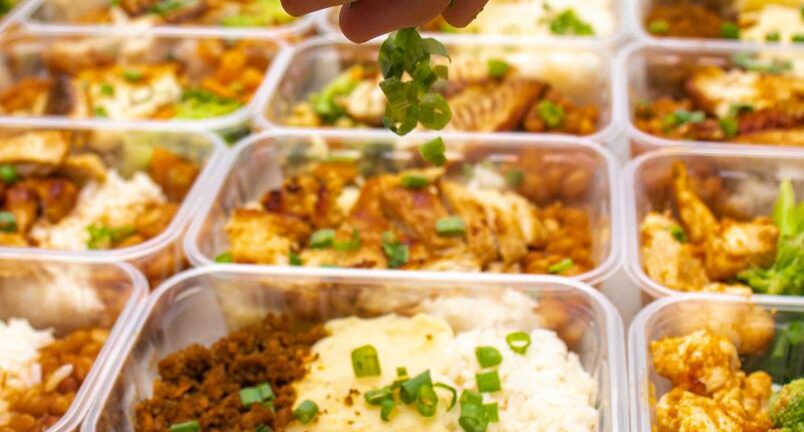
A customer who orders a halal meal kit or a burger from a delivery app never sees the kitchen. There is no storefront, no visible certification plaque on the wall, and often no single kitchen at all: the product may move from a central commissary to a shared cooking space to a third party courier before it reaches the door. The existing halal standards already cover these models through their food service and catering requirements, but the audit evidence has to be assembled differently than for a conventional restaurant or a single processing plant. This article looks at what halal certification means for meal kits and ghost kitchens: why these models strain the usual approach, what auditors actually check, and how operators can build certification into the model from the start rather than retrofitting it after the first complaint.
1. Two Business Models, One Shared Weak Point
Meal kits and ghost kitchens look different but share the same structural challenge. A meal kit company does not sell cooked food at all: it sells a curated box of portioned ingredients, sauces and spice blends that the customer cooks at home. Its halal risk sits almost entirely in procurement and assembly, in what goes into the box and what shares the packing line. A ghost kitchen, also called a cloud kitchen or dark kitchen, sells finished meals with no dining room, often running several virtual brands out of one facility and relying entirely on delivery platforms for the customer relationship. Its halal risk sits in shared equipment, shared fryers and grills, and a delivery chain it does not fully control.
The weak point in both models is the same: the consumer cannot verify anything directly. In a restaurant, a skeptical customer can ask to see the certificate, question the staff, or watch the kitchen. In a delivery model, the entire halal promise is carried by the brand, the certificate behind it, and the discipline of the supply chain. That makes third party certification more important in these models, not less.
2. The Market Behind the Models
Both models have grown from niche formats into mainstream food channels. Grand View Research valued the global meal kit delivery services market at about $39.4 billion in 2025, projected to reach about $79.8 billion by 2033, a compound rate of 8.4% a year. The same research house puts the global cloud kitchen market at about $80.3 billion in 2025, projected to reach about $203.7 billion by 2033, growing at 12.6% a year, a double digit annual rate. Against that, DinarStandard’s July 2026 market entry report estimates halal food consumer spending at about $1.53 trillion in 2025, on its way to about $2.06 trillion by 2029. The overlap of these curves is the opportunity: a fast growing delivery channel serving a fast growing consumer base.
Two Delivery Models, Two Growth Curves (Global Market, US$ Billion)
Sources: Grand View Research, meal kit delivery services and cloud kitchen market reports (2025 base year, 2033 projections; bars share one scale). Halal food consumer spending, a separate and broader measure, is estimated by DinarStandard (July 2026) at $1.53 trillion in 2025, projected to reach $2.06 trillion by 2029.
The figures measure different things and should not be added together: the meal kit and cloud kitchen numbers are global market revenues across all consumers, while the halal figure is consumer spending by Muslim households worldwide. What matters for an operator is the direction of both: two fast growing delivery channels serving a fast growing consumer base. The businesses that win will be the ones whose halal promise survives the journey.
3. Why Halal Gets Complicated When the Kitchen Is Invisible
The audit model for halal certification is easiest to apply to a bounded site: one facility, one management team, one set of processes that an auditor can walk through. Ghost kitchens complicate each part of that application. A single facility may host ten or twenty virtual brands owned by different companies, sharing prep tables, fryers, walk in coolers and dishwashing lines. Some of those brands may sell halal menus while others sell pork or handle alcohol based sauces in the same room. The customer ordering from a halal branded virtual restaurant has no way to know what shares its cooking line.
Meal kits break the assumptions differently. The company itself may never cook anything, so the physical audit centers on its packing and assembly operation rather than a cooking line. The risk sits in its supplier list: the chicken in the box, the stock concentrate in the sachet, the emulsifiers in the sauce mix, the gelatin in the dessert cup. Certification therefore leans heavily on supplier documentation alongside the site audit, which changes where the evidence comes from.
4. What an Auditor Checks in a Ghost Kitchen
For a ghost kitchen or commissary, an auditor’s first question is segregation. Are halal and non halal products stored, prepared and cooked on separated lines, or is there a validated cleaning procedure between runs that meets the standard’s requirements? Shared fryers are the classic failure point: oil that has cooked non halal items cannot be treated as halal for the next batch. The second question is sourcing: every meat, poultry and processed ingredient entering the facility needs a verifiable halal certificate from a recognized issuer, and the auditor will sample purchase records against certificates on file. The third is people and process: who supervises the halal line, what training records exist, and how the facility handles a delivery of uncertified product that arrives by mistake.
Facilities that design the layout around segregation from day one, with dedicated storage, color coded utensils and separate cooking equipment for the halal brands, present a simpler audit than those relying on cleaning between runs. Retrofitting segregation into a live shared kitchen is possible, but it means redesigning working systems while they are running.
5. Meal Kits: Certification Moves Upstream Into the Box
A meal kit company’s certification file is mostly a supplier file. The audit centers on three things. First, the ingredient register: every component of every recipe, down to spice blends, stock bases, oils and flavorings, mapped to a supplier and a certificate or a documented halal assessment. Ingredients that look trivial are the ones that fail, such as a stock powder with an animal derived flavor carrier or a sauce with wine vinegar produced to a residual alcohol level the target market does not accept. Second, the assembly line: how the facility keeps halal boxes separate when the same packers handle non halal kits, and how substitutions are controlled when a certified ingredient runs out. Third, the recipe change process: meal kit menus rotate weekly, and every new recipe is a potential new uncertified ingredient, so the certification agreement has to define how new items are reviewed before they ship.
This last point is where meal kit companies most often stumble operationally. A static product line is usually certified once and then re audited on the scheme’s surveillance cycle, often annually. A meal kit menu that rotates weekly can change fifty two times a year. The workable model is a certified supplier register and a standing recipe review step, so that any new box is assembled only from approved components, rather than certifying each weekly menu as a separate product.
6. Delivery and the Last Mile Problem
The final segment is the one operators control least. Third party couriers carry halal orders in the same bags and vehicles as non halal orders. The practical mitigations are packaging and procedure: sealed, tamper evident packaging that keeps the product enclosed from kitchen to customer, and clear separation of halal orders at the dispatch point. Some delivery platforms let customers filter for halal merchants and ask merchants to substantiate the claim behind the filter, which shows where platform expectations are heading. An auditor will ask how the operator prevents the box or bag from being opened, contaminated or swapped in transit, and the answer needs to be a procedure, not an assumption.
Meal kit companies face the same question in reverse: their boxes move through general parcel networks alongside everything else people order. The workable controls are structural rather than supervisory. Ingredients most sensitive to cross contact travel in sealed inner packaging inside the outer box, raw meat and poultry are packed separately from produce, and insulation and coolant keep the cold chain intact so that safety and halal integrity arrive together. Operators who document these packing rules as part of their halal assurance file give the auditor something concrete to verify, and give themselves a defensible answer when a customer asks how the promise survives the journey.
7. The Certification Path, Step by Step
The sequence for these models mirrors the standard certification path, with the site questions replaced by supply chain questions. It starts with scoping: which brands, recipes and facilities are covered, and which markets the certificate must satisfy, because a certificate aimed at domestic consumers and one aimed at export oriented buyers in the Gulf or Southeast Asia follow different recognition chains. Then comes the documentation stage: ingredient registers, supplier certificates, process descriptions and cleaning procedures. The facility audit follows, and for meal kit operations it places as much weight on the supplier file as on the physical line. Our step by step guide to halal certification under GSO and SMIIC standards covers the full sequence and the evidence each stage requires, and our article on certification for restaurants and caterers describes what auditors check in a working kitchen, much of which applies directly to a ghost kitchen line.
8. What Buyers and Platforms Now Expect
Delivery platforms and grocery partners increasingly treat halal as a filterable attribute, and a filter is only as good as the verification behind it. Merchants should expect platform onboarding in Muslim majority markets to ask for certificate copies, and corporate catering buyers to ask for the certificate’s scope and issuer rather than accepting a logo on a menu. The businesses that treat certification as part of the brand, displayed on the menu page and the box, convert it into a sales asset. The ones that treat it as paperwork tend to discover its value only after a complaint or a delisting.
There is also a quieter commercial benefit. The discipline certification imposes, a controlled supplier register, documented segregation, sealed packaging and a recipe review step, is the same discipline behind consistent product quality and reliable fulfillment. The certification file built for the auditor doubles as an operating manual for the kitchen, so its value shows up in day to day operations, not only at audit time. Our analysis of the return on halal certification investment looks at that calculation across the wider market.
9. Where the Standards Sit
There is no separate halal standard written for delivery models; the existing standards already cover them through their food service and catering provisions. OIC/SMIIC 1:2019 sets the general requirements for halal food across the supply chain, including storage, transport and preparation. GSO 2055-1 plays the same role in the Gulf market, and national schemes such as Malaysia’s MPPHM add their own procedural requirements for food service premises. The certification body’s job is to apply those general requirements to the specific structure of a shared kitchen or a subscription box, which is why the scoping conversation matters more than the checklist.
10. Where This Is Going
The direction of travel is clear: more meals will be cooked in invisible kitchens and more food will arrive in boxes, and the halal assurance behind them will be judged by the certificate and the audit trail rather than by anything the customer can see. Operators building these models today make the audit simpler if they design segregation, supplier control and delivery integrity in from the start, because retrofitting them into a live operation means redesigning working systems. The certificate is not the finish line; it is the visible tip of a supply chain that was built to deserve it.
Sources and Further Reading
- Grand View Research, Meal Kit Delivery Services Market Size Report, 2026 to 2033 (global market valued at $39.4 billion in 2025, projected to $79.8 billion by 2033)
- Grand View Research, Cloud Kitchen Market Size and Share Report, 2026 to 2033 (global market valued at $80.3 billion in 2025, projected to $203.7 billion by 2033)
- DinarStandard, How U.S. and Canada Food Companies Can Enter the $302B Global Halal Food Market, July 2026. Market figures reflect this report’s July 2026 publication date.
- Standards and Metrology Institute for Islamic Countries, OIC/SMIIC 1:2019 General Requirements for Halal Food
- Circle H International, How to Get Halal Certified: GSO and SMIIC Standards
- Circle H International, Halal Certification for Restaurants and Caterers: What Auditors Check in a Working Kitchen
Circle H International
Ready to Start Your Halal Certification?
Circle H International certifies products, facilities, and supply chains against international halal standards. Submit a certification request to get started.
