

Cleaning Agents in Halal Food Production: Separate Ingredient Review, Sanitation and Ritual Requirements
A cleaning chemical can be suitable for a particular sanitation task without answering every question in a halal assessment. Equally, a halal related statement on a chemical does not tell a food manufacturer how to dilute it, where to use it or whether its application will control the relevant food safety hazards. Purchasing and quality teams need to keep those questions connected without treating them as interchangeable.
For a certifier reviewing a food operation, cleaning evidence is about the material used, the equipment and production history, the approved procedure and the records showing what happened. This article focuses on cleaning agents used in food production rather than household consumer products. It explains how a manufacturer can prepare a clear chemical review and cleaning record, while keeping ordinary sanitation, halal material questions and any scheme specific ritual requirements distinct.
Four questions in the cleaning review
What chemical is used?
Where and how is it applied?
What scheme evidence applies?
What work was completed?
1. Define the Actual Use Before Reviewing the Product
Start with the equipment, surface and task. A chemical used on a floor is not automatically suitable for a food contact surface. A detergent used to remove a particular residue is not automatically a sanitizer. A product intended for a defined industrial process should not be substituted merely because another container carries a reassuring general claim. The manufacturer's instructions and the operation's food safety requirements remain essential.
Record the chemical's commercial name, supplier, product code and intended use in the plant. Describe where it will be stored, how it will be applied and whether it can contact food equipment or packaging. Identify whether the proposed use is already covered by an established procedure or requires review. This gives the quality team and the certification reviewer a concrete starting point instead of an ambiguous description such as approved cleaner.
Keep the proposed use separate from a decision about the chemical's ingredients. Both matter, but they require different evidence. A formulation statement does not establish that staff followed the correct application procedure. A completed cleaning checklist does not establish the origin of every ingredient in the chemical. The review becomes clearer when each document has an identified question to answer.
2. Preserve Food Safety Requirements as Their Own Obligation
For food operations subject to United States current good manufacturing practice requirements in 21 CFR part 117, section 117.35 addresses sanitary operations. It requires cleaning and sanitizing to protect against allergen cross contact and contamination of food, food contact surfaces and food packaging materials. These are food safety obligations. They should not be weakened or replaced by assumptions about the religious status of a cleaning product.
The same provision states that cleaning compounds and sanitizing agents must be free from undesirable microorganisms and safe and adequate under their conditions of use. It describes verification through effective means, including purchasing under a letter of guarantee or certification or examining the substances for contamination. The important point for this article is the requirement's actual scope: safe and adequate use in the food operation, not a universal halal approval.
The provision also requires relevant toxic cleaning and sanitizing materials to be identified, held and stored in a manner that protects against contamination. A halal review should be coordinated with these controls rather than creating a separate informal storage arrangement. Keep chemical identification, authorized access and use instructions consistent across sanitation, production and quality records. A product cannot be evaluated sensibly if the business cannot reliably identify what is being used.
3. Do Not Confuse Cleaning With Sanitizing
Cleaning and sanitizing address related but different tasks. A procedure should explain what material is being removed, what equipment is involved and which additional controls are needed for the operation. Avoid using the words as though they were interchangeable assurances. If staff say an item has been cleaned, the record should make clear which procedure was completed and how its outcome was checked.
Section 117.35 illustrates why the context matters. It has specific provisions for food contact surfaces used with low moisture food and for wet processing. For example, it describes the need for low moisture food contact surfaces to be in a clean, dry and sanitary condition before use, and addresses sanitizing and drying after wet cleaning when necessary. This is not a reason to apply the same wet procedure everywhere.
The practical lesson is to use the procedure suitable for the facility, product and hazards, with competent food safety input. Do not change chemical concentration, contact time, rinsing or drying arrangements solely to make a general halal claim sound simpler. Where a proposed change raises both food safety and halal questions, bring the two reviews together before implementation. Each reviewer should understand the actual process being proposed.
4. Ask for Ingredient Evidence Without Inventing Universal Rules
A cleaning formulation may need review under the applicable halal scheme, particularly where its composition or use raises a relevant question. Request the evidence the certification body needs for the particular material and task. That may include supplier information and a suitable account of relevant ingredients or processing. The precise request should follow the scheme and assessment, not an unsupported claim that every chemical requires identical documentation.
Do not assume that a word such as natural, green, plant based or biodegradable answers the halal question. Those descriptions have their own meanings and evidence needs. They do not identify every ingredient source or establish acceptance under every certification scheme. Similarly, the absence of a familiar animal ingredient from a short sales description does not settle the complete formulation. Ask the supplier and the certification body the actual unresolved question.
Avoid the opposite overstatement as well. It would be misleading to announce that every enzyme, alcohol containing chemical or animal derived ingredient has the same status in every use and jurisdiction. This article does not set such a rule. Record the material, source information and use, then obtain the assessment required by the applicable scheme. Where the information remains incomplete, preserve the question instead of turning an inference into an approval.
5. Distinguish Routine Sanitation From Ritual Cleansing
A business should not assume that ordinary sanitation automatically satisfies any ritual cleansing requirement, or that a ritual procedure replaces the controls needed for food safety. Determine whether a ritual requirement actually applies to the equipment and production history, and obtain the relevant authority's or certification body's instructions. Do not copy a procedure from an unrelated market and present it as a global rule.
Singapore provides a useful example of a separately administered service. Muis lists Food Verification and Ritual Cleansing services alongside its certification information. Its service request page and published resources describe a formal route with service conditions, supporting information and payment arrangements. This establishes that the authority treats the service as something with its own process. It does not establish that the same service or procedure applies in every country.
For an applicant, the practical step is to disclose relevant equipment history and ask how the applicable scheme treats it. Record who is authorized to assess or conduct any required procedure and what evidence must be retained. If the equipment has moved between sites or has an uncertain history, say so. Concealing that uncertainty or substituting a general cleaning declaration prevents the reviewer from evaluating the actual situation.
6. Do Not Present an Unfinished Standards Project as a Final Rule
SMIIC's public development information includes a project titled Ritual Cleaning and Cleaning Agents for Halal Production and Supply Chain Facilities. At the time of this review, the project page shows preparatory status at stage 20.20, and the standards under development list identifies it as OIC/SMIIC WD 68. That is evidence of work under development, not proof of final published technical requirements.
This distinction matters when a supplier or article claims that a new global cleaning rule already requires a particular chemical, concentration or sequence. Ask for the exact published source and applicable scheme basis. A working project title cannot support invented clauses. If a business has a current contractual or scheme instruction on cleaning, assess that instruction on its own evidence rather than attributing it to an unfinished standard.
Monitoring the project may be useful for future planning. Record its status and the date checked, and review it again when the publisher announces a material change. Do not assume a publication date, transition deadline or global adoption. The current certification assessment still needs an identified basis for the requirements applied to the manufacturer's operation.
7. Build a Chemical Review File That Connects to the Procedure
For each cleaning material under review, retain the supplier identity, product identification, specification and instructions relevant to use. Add the formulation or origin evidence requested for the halal assessment and any clarification received. Keep the current document version visible. If the supplier changes the product code or description, establish whether the material has changed before treating the old review as automatically valid.
Connect that file to the plant's authorized chemical list and the cleaning procedure. The procedure should identify where the product is used, who prepares or applies it and how the operation verifies that the required work was completed. Relevant details will depend on the process and hazard controls. The purpose is to make the actual practice recoverable, not to prescribe one generic form for every food plant.
Record the review decision and its limits. Approval for one use should not silently become approval for every surface or every site. If the certification body has specified conditions, preserve those conditions alongside the decision. Staff need to know what they can use, where they can use it and which proposed changes must return for review. A folder containing a supplier certificate alone does not communicate those operational boundaries.
8. Control Substitutions and Supplier Changes
Cleaning products are sometimes discussed as routine maintenance purchases, but a substitution can affect both technical use and the evidence held for certification. A different concentration, formula, supplier or application instruction deserves review according to the plant's change control arrangements. Procurement should not assume that similar packaging or a similar product name establishes equivalence.
Create a route for sanitation staff to report a shortage or proposed alternative before it is used. The review should consider equipment compatibility, food safety requirements, supplier information and any relevant halal conditions. The appropriate reviewers may differ according to the change. Record the decision and update the authorized list or procedure when needed so that the operational team is not left with contradictory instructions.
The same principle applies when a supplier updates a formulation without changing the familiar brand name. Ask what changed and whether earlier evidence still applies. Where the information is not available, seek guidance through the agreed process. Do not describe an uncertain material as compliant simply because its predecessor was reviewed. Certification evidence must remain connected to the actual product used in the operation.
9. Verify What Happened, Not Just What Was Planned
A written procedure describes intended practice. Records and observation help establish what happened. For a relevant cleaning event, retain the equipment or area identity, date, responsible personnel and confirmation of the checks required by the procedure. Where the process requires measurements or other verification, keep those results connected to the event rather than collecting them in an unrelated file.
If a step was missed or a chemical was used incorrectly, document the departure and assess its consequences through the plant's procedures. Do not recreate a perfect record after the fact. The food safety team and certification body may need different information to evaluate the issue, but both need accurate facts. The response should address affected products or equipment, the immediate correction and the reason the control failed.
A laboratory result can sometimes contribute to an investigation, but it should answer a defined question and be suitable for the sample and material. It does not automatically prove that every cleaning or ritual condition was fulfilled. Likewise, a visual check cannot be expanded into evidence for every chemical residue or biological target. Keep verification proportionate to what the method actually establishes.
10. Keep Claims About Cleaning Products Within the Evidence
A supplier's halal related claim should be checked for the exact material, manufacturing identity, scope and validity relevant to the purchase. Do not treat a logo on a brochure as blanket coverage for every product the supplier sells. If a certificate is offered, verify it through the appropriate source and confirm that the product identification matches. This is a document check, not a replacement for assessing the intended use.
A food manufacturer should also be cautious about its own public claims. Using a reviewed cleaning material does not, by itself, establish that the whole facility or every food product is certified. A sanitation program does not create a universal religious ruling. State only the scope that has actually been assessed and authorized, and keep commercial descriptions separate from the technical evidence needed for certification.
The benefit of a clear review is practical clarity rather than a promised number of days saved or a guaranteed market result. Procurement knows which materials are authorized. Sanitation staff know the applicable procedure. Quality teams can recover the evidence. The certification reviewer can see the material, use and records without being asked to accept broad language about purity in place of facts.
11. Prepare for a Focused Certification Review
Before an assessment, select a relevant cleaning procedure and follow its evidence trail. Identify the chemical, locate its current supplier documents, confirm the authorized use and review an actual completed record. Ask staff what they do if the product is unavailable or if equipment history raises a question. This is an internal check of the system, not an instruction to stage an artificial demonstration for the auditor.
Bring unresolved questions to the certification body early enough for a proper review. Explain whether the issue concerns ingredient information, a proposed substitution, equipment history or a possible ritual requirement. Keep the food safety review active at the same time. A solution must be suitable for the actual operation and the applicable certification conditions, not merely persuasive in a sales description.
Cleaning agents belong in a connected evidence system. Their composition, safe use, operational records and any scheme specific ritual requirements should each have an identified basis. Keeping those responsibilities distinct helps the manufacturer present an accurate application and helps the certifier evaluate it. Neither side benefits when a general claim about a chemical is asked to replace the rest of the assessment.
Sources and Further Reading
United States eCFR, 21 CFR 117.35, Sanitary operations: Read source
SMIIC, cleaning project status: Read source
SMIIC, standards under development: Read source
SMIIC, standards catalogue: Read source
Muis, scheme types and services: Read source
Muis, business resources and service circulars: Read source
Muis, Food Verification and Ritual Cleansing service request information: Read source
Government of Malaysia, preparation for halal certification: Read source
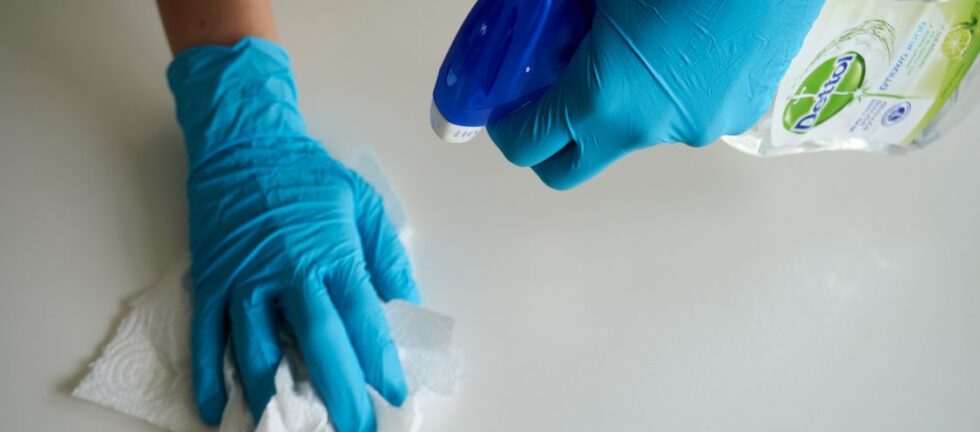
Featured photo: Pexels. Illustrative image, not a photograph of a Circle H assessment.
Circle H International
Ready to Start Your Halal Certification?
Circle H International certifies products, facilities, and supply chains against international halal standards. Submit a certification request to get started.
