

Introduction: The Complex Chemistry of Modern Beverage Manufacturing
The global beverage industry is a multi-hundred-billion-dollar enterprise characterized by rapid product innovation and diverse consumer categories. From sparkling carbonated soft drinks and 100% reconstituted fruit juices to ready-to-drink (RTD) functional teas, energy drinks, vitamin-enhanced waters, botanical tonics, and non-alcoholic malt beverages, modern drinks are sophisticated chemical formulations. To consumers, a bottle of fruit juice or sparkling flavored soda appears to be a simple, wholesome combination of water, fruit concentrate, sweetening syrups, and refreshing aromas. In reality, the industrial transformation of raw botanical extracts into crystal-clear, shelf-stable, and brightly colored commercial beverages relies on an intricate matrix of solvent chemistry, enzymatic clarification, colloidal weighting agents, and micro-encapsulated functional active ingredients.
يَا أَيُّهَا الَّذِينَ آمَنُوا إِنَّمَا الْخَمْرُ وَالْمَيْسِرُ وَالْأَنصَابُ وَالْأَزْلَامُ رِجْسٌ مِّنْ عَمَلِ الشَّيْطَانِ فَاجْتَنِبُوهُ لَعَلَّكُمْ تُفْلِحُونَ
Surah Al-Ma’idah (5:90)
For international beverage manufacturers seeking commercial distribution across the high-growth markets of the Gulf Cooperation Council (GCC), Southeast Asia, and broader Muslim-majority territories, compliance with Halal standards presents an exacting technical and regulatory challenge. In beverage science, the primary compliance vulnerabilities do not typically originate from obvious animal meats, but from invisible processing aids: residual ethyl alcohol (ethanol) functioning as a flavor carrier, porcine-derived gelatin used in juice clarification, insect-derived colorants, and animal-derived active vitamins. Under international accreditation standards such as GSO 2055-1, OIC/SMIIC 1, and MS 1500, food safety authorities and customs inspectors enforce strict analytical thresholds. This comprehensive guide outlines the Halal control points (HCPs) in commercial beverage manufacturing and details the certification protocols administered by Circle H International.
The Ethanol Dilemma: Juristic Classifications and Analytical Thresholds
No topic in modern Halal food conformity generates more debate, rigorous scrutiny, and technical testing than the presence of ethyl alcohol (ethanol, C2H5OH) in commercial beverages. Islamic jurisprudence establishes an absolute, uncompromising prohibition against khamr – defined across all classical schools of Islamic law as any alcoholic intoxicant deliberately brewed, fermented, or distilled for human recreational consumption (such as wine, beer, and spirits). Any food or beverage containing even a minute drop of khamr is ritually impure (najis) and strictly haram.
Distinguishing Khamr from Industrial and Incidental Ethanol
Contemporary Islamic juristic academies (including the International Islamic Fiqh Academy of the OIC) and premier international Halal standardization bodies draw an essential technical distinction between khamr and industrial or incidental ethanol. Industrial ethanol produced via synthetic ethylene hydration or non-intoxicating agricultural fermentation, when utilized strictly as an extraction solvent or chemical processing carrier for aromatic compounds, is not considered khamr per se. However, because ethanol retains the intrinsic chemical potential to intoxicate at higher concentrations, standard-setting authorities have established strict quantitative limits governing residual ethanol in finished consumer products.
International Regulatory Standards and Permissibility Limits
Manufacturers formulating for global export must navigate subtle but critical differences across regional Halal regulatory frameworks:
- Flavor Concentrates and Essences: Under OIC/SMIIC 1, UAE.S/GSO 2055-1, and Malaysian Standard MS 1500, ethyl alcohol is permitted as a solvent in natural and artificial flavoring extracts, provided the ethanol concentration in the raw flavor concentrate does not exceed 0.5% (v/v) in some jurisdictions, or is utilized at the minimum technical dosage necessary to stabilize essential oils.
- Finished Packaged Beverages: In the final, bottled consumer beverage, residual ethanol resulting from flavor additions, fruit juice natural maturation, or yeast metabolic traces must remain below strict statutory thresholds. Under GSO 2055-1 and SMIIC 1 guidelines, the residual ethanol concentration in the finished consumer beverage must not exceed 0.1% (w/w or v/v), and in certain highly sensitive categories or specific markets (such as Indonesia under BPJPH regulations), authorities enforce limits as low as 0.05% or below the limit of detection (LOD) via gas chromatography. Crucially, the finished beverage must display zero organoleptic traits of alcohol – meaning it must not smell, taste, or induce any sensory perception of intoxicating liquor.
The Challenge of Fermented Functional Drinks: Kombucha and Kefir
The explosive rise of functional, probiotic-rich beverages, particularly kombucha (fermented tea) and water kefir, introduces acute compliance risks. Kombucha is produced through the symbiotic fermentation of sweetened tea by a symbiotic culture of bacteria and yeast (SCOBY). During this living biological process, yeasts metabolize sucrose into glucose and ethanol, while acetic acid bacteria convert ethanol into beneficial organic acids. However, because fermentation frequently continues inside the commercial bottle during retail distribution and ambient temperature fluctuations, ethanol levels in commercial kombucha regularly spike from 0.2% to well over 1.5% ABV on retail shelves. Unless kombucha manufacturers utilize validated industrial pasteurization, spinning-cone de-alcoholization columns, or specialized microfiltration to permanently arrest yeast activity and maintain verified ethanol levels below 0.1%, such products cannot be certified Halal.
Flavor Emulsions, Solvents, and Weighting Chemistry
The characteristic taste of citrus sodas (lemon-lime, orange, grapefruit) and dark colas depends entirely on lipophilic essential oils extracted from fruit peels or botanical spices. Because essential oils are insoluble in water and possess a lower density (approximately 0.84 to 0.88 g/cm³) than water-sucrose beverage bases (1.04 to 1.06 g/cm³), unweighted citrus oils naturally separate, floating to the surface of the bottle to form an unsightly “ringing” neck-band. To create permanently stable, cloud-stable beverage emulsions, beverage formulators utilize sophisticated solvent and weighting systems.
Solvent Carriers: Eliminating Ethanol Non-Conformances
To disperse concentrated aroma compounds into water, flavor houses dissolve essential oils in polar solvent carriers. While historical formulations relied heavily on ethanol solutions, Halal-compliant beverage processors must specify alternative carrier matrices:
- Propylene Glycol (USP Grade, E1520): A synthetic diol that functions as an exceptional solvent for hydrophobic flavor molecules. Synthetic USP propylene glycol is completely Halal-compliant, provided it is produced via petrochemical synthesis (propylene oxide hydration) and handled in dedicated food-grade tankers.
- Vegetable Glycerin (Glycerol, E422): Commonly utilized as a flavor carrier and mouthfeel enhancer. The Halal status of glycerin depends entirely on lipid provenance. If glycerol is isolated as a byproduct of vegetable oil refining (such as palm or soy biodiesel processing), it is Halal. If isolated from animal tallow or mixed-origin rendering co-products, it is non-compliant.
- Triacetin (Glycerol Triacetate, E1518): Synthesized by esterifying glycerol with acetic acid. The glycerol precursor must be verified as 100% plant-derived.
Weighting Agents and Clouding Chemistry
To match the density of essential oil droplets to the surrounding water phase, flavor chemists blend the oils with high-density lipophilic weighting agents:
- Glycerol Ester of Wood Rosin (Ester Gum, E445): Produced by harvesting wood rosin from aged pine tree stumps and reacting it with food-grade glycerol to achieve a density of approximately 1.08 g/cm³. While the pine rosin is botanical, the glycerol reactant must be verified as certified Halal vegetable-derived glycerol.
- Sucrose Acetate Isobutyrate (SAIB, E444): Synthesized by esterifying sucrose with acetic and isobutyric anhydrides, providing a dense, plant-based weighting matrix.
- Brominated Vegetable Oil (BVO): Historically used but increasingly banned across global food safety jurisdictions due to toxicological concerns regarding bromine accumulation.
Clarification and Fining Agents in Fruit Juices
Clear apple juice, white grape juice, berry ciders, and flavored wine-alternative spritzers are expected by consumers to display brilliant clarity with zero haze, cloudiness, or sedimentation. Freshly pressed raw fruit juice contains high concentrations of suspended insoluble solids, including colloidal pectins, tannins, polyphenols, and cellular proteins that resist gravity settling. To achieve commercial clarity, juice processors pass the liquid through a multi-stage process known as “fining” or clarification.
The Porcine Gelatin Risk in Fining
The most widely deployed, cost-effective industrial fining agent in the international fruit juice industry is food-grade gelatin. When added to cloudy fruit juice, positively charged gelatin molecules bind electrostatically to negatively charged polyphenolic tannins and suspended protein fragments, aggregating into dense flocculants that precipitate out of solution, leaving crystal-clear supernatant juice.
However, from a Halal compliance perspective, gelatin represents a catastrophic vulnerability. The global gelatin supply is overwhelmingly dominated by Type A porcine gelatin derived from pigskin. Under all internationally recognized Halal standards, including SMIIC 1 and GSO 2055-1, the use of porcine gelatin at any stage of manufacturing – even if the gelatin is subsequently filtered out and undetectable in the final packaged juice – renders the beverage strictly haram. The Islamic legal principle states that the introduction of a ritually impure processing aid contaminates the liquid matrix irreversibly. To achieve Halal certification, juice processors must transition to certified plant-based or mineral fining alternatives:
- Bentonite Clay: A natural volcanic montmorillonite clay that swells in water and adsorbs colloidal proteins through cation exchange. 100% mineral and inherently Halal.
- Silica Sol (Kieselsol): Aqueous colloidal suspensions of silicon dioxide that bind proteins and promote rapid flocculation without animal contact.
- Polyvinylpolypyrrolidone (PVPP, E1202): A synthetic cross-linked polymer that selectively complexes with and removes haze-forming polyphenols and bitter catechins.
- Fish Gelatin (Isinglass): Collagen extracted from fish skins or dried swim bladders of sturgeon and freshwater fish. Permissible under mainstream Halal standards, provided processing aids meet purity criteria.
Biocatalytic De-Pectinization Enzymes
In conjunction with fining agents, modern juice lines utilize industrial pectinase and hemicellulase enzyme complexes to hydrolyze the protective pectin sheath surrounding suspended pulp particles. As established in bakery science, industrial enzymes produced through fungal fermentation (principally Aspergillus niger) must be certified to ensure that microbial growth broths are free from animal peptones and that liquid enzyme preparations utilize certified Halal glycerol or propylene glycol stabilizers.
Functional Ingredients and Active Additives
The rapid growth of the energy drink and functional wellness beverage market introduces specialized active micronutrients that demand rigorous origin verification:
Taurine (2-Aminoethanesulfonic Acid)
Taurine is an essential active ingredient in nearly all commercial energy drinks, prized for its role in cellular osmoregulation, cardiovascular health, and cognitive performance. Taurine was originally discovered and isolated from ox bile (hence its name, derived from the Latin taurus). Today, the overwhelming majority of commercial food-grade taurine is synthesized chemically through the reaction of ethylene oxide with sodium bisulfite, followed by amination. Circle H International auditors inspect supplier chemical synthesis diagrams to confirm that taurine used in certified energy drinks is 100% synthetic and entirely free of animal bile extracts.
Micro-Encapsulated Vitamins and Colorants
Fat-soluble vitamins (such as Vitamin D3, Vitamin A, and Vitamin E) and oil-soluble natural colors (such as beta-carotene, E160a, and paprika oleoresin, E160c) are insoluble in aqueous beverages. To incorporate them into clear or cloudy drinks, ingredient suppliers manufacture micro-encapsulated spray-dried powders. In conventional supply chains, porcine gelatin and bovine gelatin are widely employed as micro-encapsulating shell matrices to protect active vitamins from oxidative degradation caused by dissolved oxygen and UV light exposure.
Beverage manufacturers must audit their vitamin premix suppliers to ensure that micro-encapsulation shells utilize modified food starches (such as sodium octenyl succinate starch, E1450), gum arabic (acacia gum), or maltodextrins rather than uncertified animal gelatins.
The Prohibition of Carmine / Cochineal (E120)
Red, pink, and purple beverages – such as ruby red grapefruit juices, strawberry lemonades, and energy punches – often utilize Carmine or Cochineal Extract (Natural Red 4, E120) for its vibrant, heat-stable, and light-stable color profile. Carmine is obtained by aqueous-alcoholic extraction of carminic acid from the dried bodies of female cochineal insects (Dactylopius coccus). Under leading Halal regulatory standards, including GSO 2055-1 in the GCC and SMIIC 1 guidelines, the consumption of terrestrial insects (with the exception of locusts) is prohibited, rendering carmine-colored beverages non-compliant. Halal-compliant beverage plants must utilize botanical colorants, including anthocyanins from purple carrots, red cabbage, elderberry, or beet red (betanin, E162).
Non-Alcoholic Beers and De-Alcoholization Technology
The global market for 0.0% alcohol beers and adult premium non-alcoholic malt beverages is expanding rapidly. Processors utilize advanced de-alcoholization technologies – including vacuum rectifying columns, spinning-cone distillation systems, and low-temperature reverse osmosis membranes – to strip ethanol from traditionally brewed beer down to 0.0% to 0.05% ABV.
However, under strict Halal jurisprudence and standard OIC/SMIIC 1, if a beverage was originally fermented as an intoxicating beer (khamr) and subsequently de-alcoholized, many classical scholars and national regulatory authorities consider the product intrinsically non-compliant due to its direct origin from khamr and the use of dedicated brewing equipment. To achieve Halal certification in the malt beverage sector, manufacturers must employ “arrested fermentation” protocols or utilize unfermented malt extracts, ensuring that the liquid is never allowed to develop into an intoxicating alcoholic beverage at any stage of manufacturing.
The Circle H International Certification Protocol for Beverage Plants
Circle H International delivers comprehensive, ISO/IEC 17065-accredited certification for beverage bottling plants, canning lines, and syrup manufacturing operations worldwide. Our rigorous certification roadmap features:
- Formulation and Carrier Audit: Technical auditors evaluate complete Bills of Materials (BOM), flavor safety datasheets, solvent carrier declarations, and upstream supplier Halal certificates for every SKU.
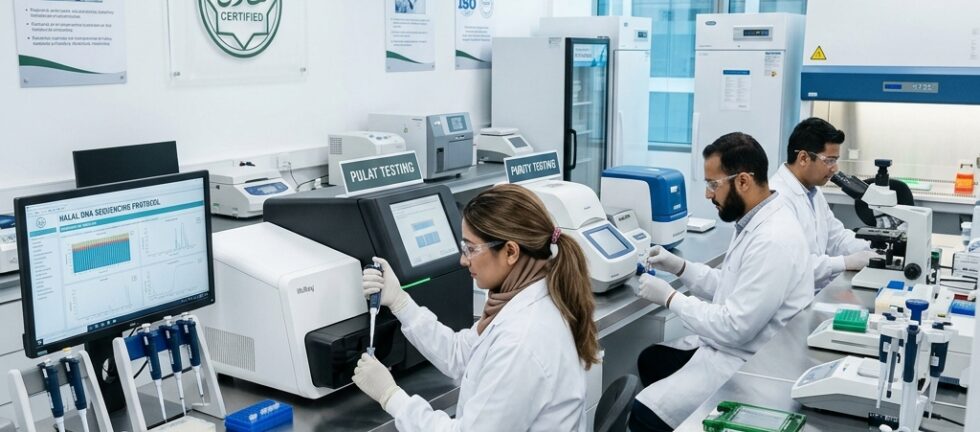
- Empirical Ethanol Quantification: Finished beverage samples from trial runs and commercial batches are subjected to gas chromatography with flame ionization detection (GC-FID) in ISO/IEC 17025 accredited laboratories to empirically confirm that residual ethanol levels remain strictly below regulatory thresholds (< 0.1% or destination market requirements).
- Clarification and Processing Aid Verification: Auditors verify all fining agents, filtration pads, activated carbons, and enzyme complexes used in upstream processing, eliminating any hidden gelatin or non-compliant bone char contact.
- CIP and Water Treatment Inspection: In bottling facilities handling alcoholic beverages or non-certified lines alongside Halal-certified products, our auditors inspect automated Clean-in-Place (CIP) systems, evaluating caustic contact times, rinse validation, and physical block-and-bleed valve manifolds that prevent cross-contamination.
- Halal Assurance System (HAS) Implementation: We guide beverage plant leadership in institutionalizing standard operating procedures (SOPs), conducting employee hygiene training, and maintaining lot-traceability logs to guarantee ongoing compliance during annual surveillance audits.
Conclusion: Unlocking High-Value Growth in Global Beverage Markets
Consumer demand for pure, ethically produced, and certified Halal beverages is expanding across the Middle East, Southeast Asia, Africa, Europe, and the Americas. By systematically eliminating porcine fining agents, reformulating flavor systems with compliant solvent carriers, verifying active micronutrients, and implementing precise analytical ethanol monitoring, beverage manufacturers secure unfettered access to the world’s fastest-growing consumer demographics.
Circle H International provides the technical rigor, international accreditation authority, and scientific excellence needed to validate your beverage products for global commercial success.
To verify active certifications or explore the global network of Circle H certified brand partners and ingredient suppliers, visit the official public registry at app.circlehinternational.org/find-certification.
Ready to Certify Your Products with Circle H International?
Join hundreds of global food and ingredient manufacturers who trust Circle H International for internationally accredited Halal certification under GSO 2055-1, OIC/SMIIC 1, and ISO/IEC 17065 benchmarks. Our senior technical auditors guide you through every audit milestone.